
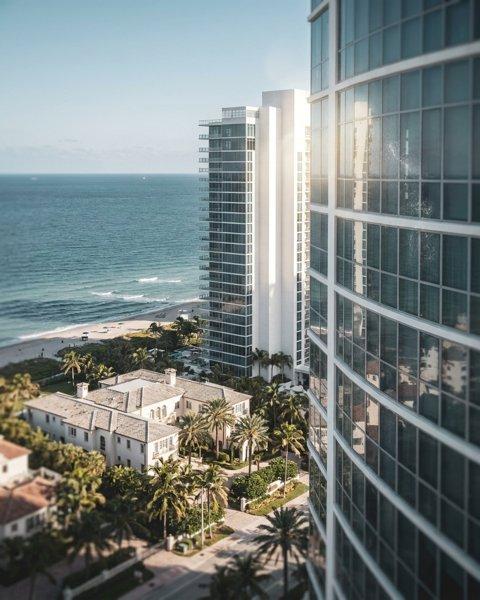
South Florida Luxury Real Estate: Navigating Market Scarcity
South Florida’s luxury market is no longer defined by a single pace, today, it’s a careful balance of scarcity and selectivity, where true waterfront and branded-residence properties remain rare even as buyer leverage grows in certain ultra-high-end segments.
Prime oceanfront and boating-oriented homes continue to set the standard for both lifestyle and long-term value. What’s changed is how discerning buyers now approach the market: patience and a targeted strategy open doors to exclusive enclaves and high-design residences that simply aren’t replicable elsewhere. As the newest development pipelines trend inland, authentic coastal properties stand apart, anchored by enduring lifestyle appeal and a reputation for stability amid shifting economic cycles.
For those looking to secure a waterfront legacy or position a portfolio for the next decade, the current window in Miami offers a chance to negotiate from strength in a market still underpinned by steady migration and global demand. Data reflects that top-tier buyers are continuously shifting their expectations, prioritizing holistic environmental value and personal longevity over standard square footage. According to macro data published in the BCG-Altagamma True-Luxury Global Consumer Insights Study, a profound structural evolution is occurring where top-tier consumers are rapidly accelerating their spend by double digits in categories linked to personal well-being, experiential intimacy, and interior design. Access to the best opportunities comes from staying ahead of the trends, curating your search, reading market signals, and knowing which homes are truly rare.
Strategic Insights: South Florida Luxury Real Estate
How does a dedicated boating infrastructure or deep-water dockage impact the daily lifestyle and privacy of a South Florida waterfront estate?
Deep-water dockage removes the logistical friction of public marinas, allowing homeowners to board vessels directly from their secure backyard. Beyond the obvious lifestyle convenience for yacht owners, true waterfront plots act as natural privacy buffers, ensuring that one entire perimeter of the estate remains entirely clear of neighboring structures and public foot traffic.
What specific architectural shifts are separating ultra-luxury coastal properties from standard inland luxury developments?
Coastal properties are heavily relying on advanced structural engineering to maximize ocean views while ensuring climate resilience, using features like elevated post-shores, wrap-around cantilevered terraces, and specialized impact glass with high wind-load ratings. Inland developments, lacking direct water access, must shift their design focus inward, relying heavily on artificial lagoons, expansive courtyard footprints, and dense perimeter landscaping to create an equivalent sense of isolation.
Why are turnkey, fully managed branded residences seeing a surge in demand from bi-coastal and international buyers compared to traditional custom estates?
Discerning, mobile buyers increasingly favor a "zero-friction" lifestyle where home maintenance does not require direct oversight. Branded residences provide an ecosystem of structural property management, continuous security, and high-touch concierge hospitality that allows owners to arrive or depart at a moment’s notice without managing local staff, landscape upkeep, or mechanical maintenance independently.
From a lifestyle perspective, what are the primary day-to-day differences between living in an exclusive residential enclave versus a high-density luxury high-rise?
Exclusive residential enclaves offer a low-density, quiet environment characterized by private entry gates, low traffic speeds, and expansive horizontal property lines that mimic a secluded retreat. High-rise living trades this expansive footprint for vertical convenience, providing immediate, elevator-access amenities like private spas, on-site fine dining, and full-service valets, though it requires sharing common building infrastructures with other residents.
How should buyers assess the true long-term value of a property's "waterfront legacy" status during shifting market conditions?
A true waterfront legacy property should be evaluated based on its linear feet of water frontage, elevation levels, and freedom from low-clearance bridges that restrict large vessel navigation. Because South Florida's coastal geographic footprint is fundamentally finite, premium waterfront locations retain intrinsic scarcity value that safeguards their market demand and capital preservation independently of broader macroeconomic fluctuations.